



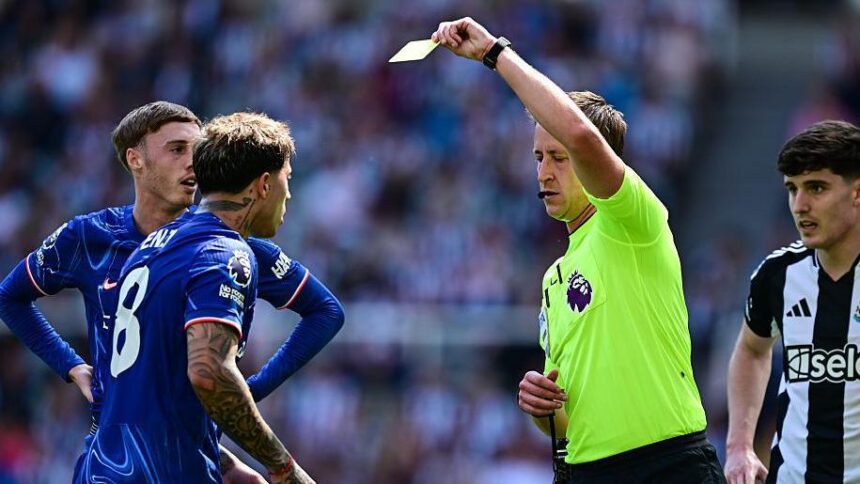
STAT WATCH: Why Chelsea’s 251 Yellow Cards and 11 Red Cards Define Their Premier League Struggles
Chelsea discipline issues have emerged as one of the clearest explanations for the club’s inconsistency since the start of the 2023/24 Premier League season. With 251 yellow cards and 11 red cards — more than any other top-flight side — Chelsea’s problems extend beyond tactics and form into game management and emotional control. In a league where fine margins decide results, poor discipline has repeatedly turned manageable situations into costly setbacks.
Chelsea Discipline Issues Explained by the Numbers
Let’s put the numbers into perspective.
-
251 yellow cards since 2023/24
-
11 red cards in the same period
-
Highest total bookings in the Premier League
This means Chelsea average well over two yellow cards per match, with red cards appearing at a frequency that directly affects game outcomes.
While aggressive teams often flirt with high booking numbers, Chelsea’s tally is not matched by consistent defensive solidity or dominance — which raises questions about why these fouls are being committed in the first place.
Tactical Reasons Behind Chelsea Discipline Issues
1. Poor Defensive Structure
One of the biggest reasons behind Chelsea’s card count is a lack of defensive cohesion. When spacing between midfield and defense breaks down, players are forced into recovery tackles — often late ones.
This leads to:
-
Tactical fouls in transition
-
Shirt-pulling to stop counters
-
Last-ditch challenges near the box
Instead of controlled pressing, Chelsea often defend in fragments, increasing the risk of bookings.
2. Over-Reliance on High-Intensity Pressing
Chelsea frequently attempt to press high without the compactness needed to sustain it. When the press is beaten:
-
Midfielders are exposed
-
Defenders step out aggressively
-
Fouls become the emergency solution
Teams like Manchester City press with structure; Chelsea press with urgency — and urgency leads to fouls.
Youth, Inexperience, and Chelsea’s Discipline Problems
Chelsea’s squad overhaul brought in an influx of young players. While this adds energy, it also introduces inexperience at Premier League level.
Young players are more prone to:
-
Mistiming tackles
-
Reacting emotionally to setbacks
-
Accumulating bookings through repeated fouls
Without enough seasoned leaders constantly organizing and calming situations, matches can quickly spiral out of control — reflected in Chelsea’s red card tally.
Mentality and Game Management Issues
Discipline is not only tactical; it is psychological.
Chelsea have struggled with:
-
Losing composure after conceding
-
Chasing games too aggressively
-
Responding emotionally to refereeing decisions
Several red cards during this period have come from:
-
Reckless second challenges
-
Dissent
-
Frustration fouls late in matches
Elite teams manage moments. Chelsea often react to them.
How Chelsea Compare to Other Premier League Teams
When placed alongside other Premier League sides, Chelsea’s numbers look even more concerning.
-
Manchester City: High pressing, but fewer cards due to positional discipline
-
Arsenal: Aggressive duels, yet better timing and structure
-
Liverpool: Intense counter-pressing, but controlled foul zones
Chelsea, by contrast, commit fouls:
-
In dangerous central areas
-
Late in defensive transitions
-
Under minimal pressure
This suggests not aggression for dominance — but fouls as damage control.
Impact on Chelsea’s Results and Performances
1. Playing with 10 Men
Red cards drastically alter matches. Chelsea have dropped valuable points in games where numerical disadvantage made pressing, possession, and defensive stability almost impossible.
2. Suspensions and Squad Instability
Accumulated yellow cards lead to:
-
Key players missing matches
-
Forced tactical reshuffles
-
Inconsistent partnerships
For a team already struggling to build rhythm, suspensions only deepen instability.
3. Loss of Tactical Identity
When players are afraid of picking up cards, intensity drops. When they’re reckless, cards rise. Chelsea frequently fluctuate between both extremes — never finding balance.
Is This a Coaching Issue?
While players must take responsibility, discipline trends over multiple seasons point toward coaching influence.
Questions Chelsea must answer:
-
Are players clear on pressing triggers?
-
Is tactical fouling coached — or uncontrolled?
-
Is game-state management emphasized enough?
Teams with clear identities foul smartly. Chelsea foul often.
Can Chelsea Fix Their Discipline Problem?
The solution doesn’t lie in reducing aggression — but refining it.
Key improvements include:
-
Better spacing between lines
-
Clearer pressing instructions
-
More leadership on the pitch
-
Improved emotional control in key moments
Discipline improves when players trust the system. Right now, too many Chelsea fouls come from players compensating for what the system fails to protect.
Conclusion: A Stat That Explains a Season
Ultimately, Chelsea discipline issues are not simply a disciplinary concern but a competitive one. Repeated suspensions, disrupted lineups, and red cards have undermined any attempt at consistency. Until Chelsea find a balance between aggression and control, these discipline problems will continue to define their Premier League campaign and limit their ability to compete at the highest level.