


Donnarumma PSG Transfer Sparks Champions League Risk
The summer following PSG’s Champions League triumph was dominated by one headline: the Donnarumma PSG transfer. Allowing the goalkeeper to depart despite his European heroics raised eyebrows and left the club facing tactical and psychological challenges for the season ahead. For a team used to dominating domestically, this gamble may have unintentionally set PSG up for underperformance at the continental level.
Why PSG’s Decision Shocked Fans
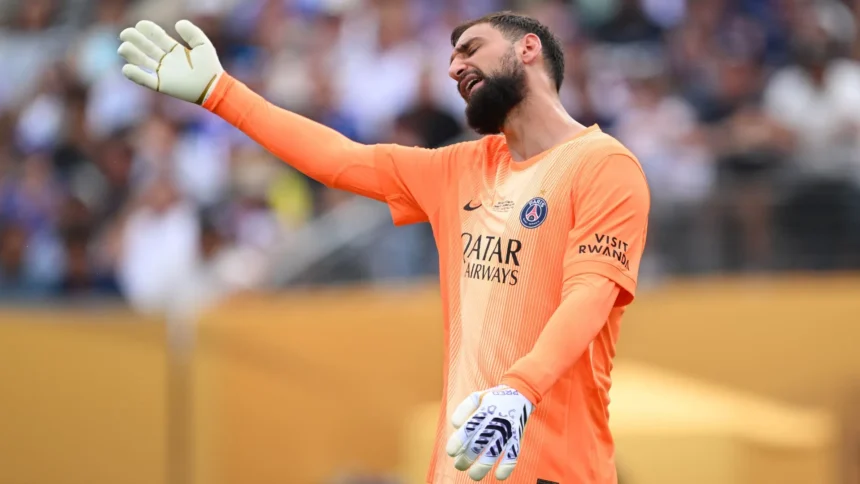
Gianluigi Donnarumma had been pivotal to PSG’s European success. In the 2024–25 Champions League, he started 15 matches, recorded six clean sheets, and made decisive saves during knockout ties, including crucial penalty shootouts. Analysts noted his presence provided stability in a squad rich with attacking talent but historically inconsistent defensively.
Despite this, PSG opted for a change in goalkeeping hierarchy, promoting young French international Lucas Chevalier and allowing Donnarumma to explore other opportunities. This high-profile PSG goalkeeper transfer appeared motivated by long-term planning and contract considerations, but its timing was controversial given the team’s recent triumph.
How the Donnarumma PSG Transfer Changed Tactics
From a tactical standpoint, goalkeepers are far more than shot-stoppers—they organize defenses, command set pieces, and provide confidence necessary for high-line play. Donnarumma excelled in these areas, and his departure disrupted established defensive patterns.
PSG’s defenders had to adjust to Chevalier’s style, which, though promising, lacked the experience and calm under pressure that Donnarumma brought. This transition exposed vulnerabilities in high-stakes European matches, particularly against teams skilled at exploiting defensive miscommunications.
Moreover, PSG’s tactical philosophy—reliant on individual brilliance and rapid transitions—requires a reliable last line of defense. The Donnarumma PSG transfer introduced an element of uncertainty at a critical moment, impacting both domestic consistency and continental ambitions.
Leadership and Psychological Impact
Beyond tactics, Donnarumma’s departure affected squad morale. He was not just a goalkeeper; he was a leader in the dressing room and a figure of trust for teammates. Losing such a figure can unsettle a squad, especially one balancing multiple competitions.
Players often internalize the exit of key figures, and analysts suggest that PSG’s early struggles in the Champions League were partially linked to Donnarumma’s departure from PSG. Integrating a new goalkeeper under high expectations compounded the psychological challenge.
Champions League Challenges
The impact of this decision was clear in Europe. PSG, winners of the previous season, faced higher expectations and stronger opposition. Defensive lapses that would have been rare with Donnarumma became more frequent, contributing to dropped points and missed opportunities in critical group-stage matches.
Chevalier showed flashes of brilliance, but the lack of established communication with the backline was evident. Analysts noted that PSG’s defensive organization regressed compared to the prior season, highlighting how pivotal the PSG goalkeeper transfer had been to squad cohesion.
Long-Term Strategic Considerations
PSG’s decision reflects a broader strategic shift: prioritizing squad evolution and younger talent over short-term continuity. While forward-thinking, this strategy carries risks. In elite football, sudden changes in key positions—especially goalkeeper—can disrupt momentum, as seen with PSG’s recent European struggles.
The Donnarumma PSG transfer gamble may pay off if Chevalier adapts and the squad evolves harmoniously. However, early signs suggest it was a high-stakes move with real consequences for Champions League performance.
Lessons from the Donnarumma Move
-
Continuity matters in elite squads: Changing key positions immediately after success can unsettle tactics and morale.
-
Goalkeepers influence more than defense: Their leadership and command are critical for high-pressure tournaments.
-
Timing is everything: Even strategic transfers must consider team cohesion and upcoming competitions.
The PSG’s Donnarumma move illustrates the delicate balance between planning for the future and maintaining the structures that produce short-term success.
Conclusion: A Calculated Risk With Consequences
The Donnarumma PSG transfer was bold, high-profile, and emblematic of PSG’s evolving strategy. While it may align with long-term goals, its timing disrupted tactical stability, defensive cohesion, and dressing-room leadership.
For a club competing on multiple fronts, stability in key roles is as important as individual talent. PSG’s gamble demonstrates that even clubs with elite resources must carefully weigh transfers of pivotal players — especially goalkeepers — to avoid underperformance in high-stakes campaigns.